
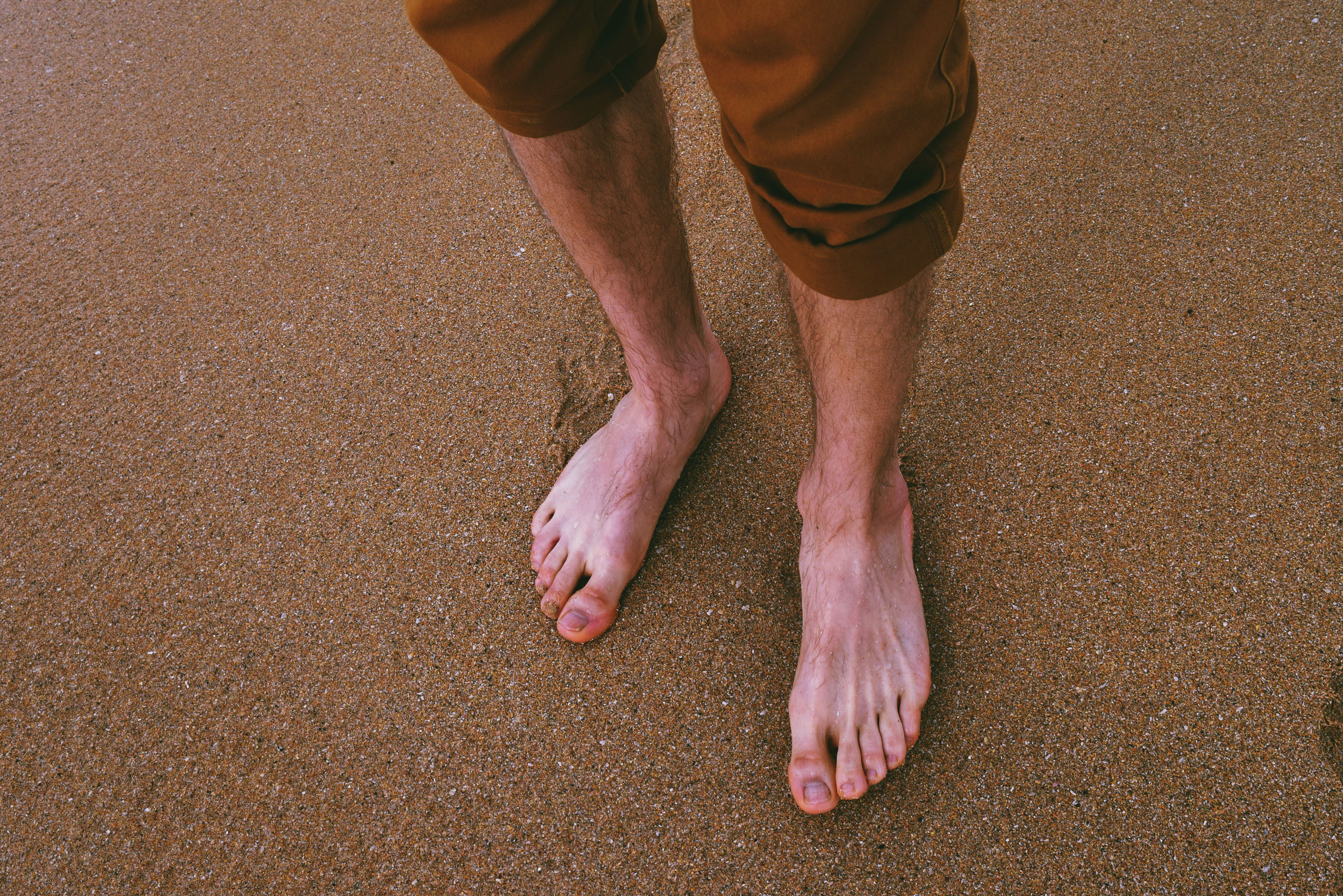
Could Your Feet Be Causing Your Back Pain?
Most people don’t think much about their feet unless they hurt. If you’re dealing with nagging low back pain, stiff hips, sore knees, or recurring discomfort after a long day, your first thought probably isn’t, “Maybe it’s my feet.”
But that’s exactly where we often begin.
Think about the foundation of a house. If it starts to shift, the cracks don’t only appear in the basement—they eventually show up throughout the structure. Doors don’t close properly. Floors become uneven. Walls begin to separate. While the damage may be visible in one room, the problem often started somewhere else.
Your body works much the same way.
Every step you take begins with your feet. They absorb the impact of walking, provide stability, and help determine how forces travel through the rest of your body. When your feet aren’t moving or supporting you as efficiently as they should, your ankles, knees, hips, pelvis, and spine often compensate.
At 5280 Balanced Health Center, that’s why we don’t simply focus on where you feel pain—we look for what’s causing it.
Your Feet Do More Than Carry You
Your feet are incredibly complex. Each one contains 26 bones, 33 joints, and more than 100 muscles, tendons, and ligaments that work together every time you stand, walk, climb stairs, or exercise.
Their job isn’t just to get you from one place to another. Healthy feet act as shock absorbers, help maintain balance, and distribute forces evenly throughout your body. Every step should create a smooth chain of movement from your feet to your ankles, knees, hips, and spine.
When that chain functions well, movement feels efficient and comfortable.
When it doesn’t, your body begins making subtle adjustments to compensate. Those changes often happen gradually, which is why many people experience discomfort elsewhere before they ever notice a problem with their feet.
How Your Feet Can Influence Your Back
Healthcare providers often refer to the body as a kinetic chain because every joint affects the joints above and below it.
Imagine a row of dominoes. If the first one shifts, the rest have to adjust.
The same principle applies to your body.
If your arches collapse more than they should, if one foot rolls inward differently than the other, or if your feet aren’t absorbing impact efficiently, those small changes can alter how your knees track, how your hips move, and how your pelvis sits.
Over time, those compensation patterns may contribute to additional stress on the muscles and joints of the lower back.
This doesn’t mean every case of back pain starts in the feet. Factors such as posture, previous injuries, work demands, activity level, and overall health all play important roles. But for many people, foot mechanics are an overlooked piece of the puzzle.
That’s why evaluating movement as a whole—not just the location of pain—is such an important part of creating a lasting treatment plan.
Signs Your Feet May Need More Support
One of the biggest misconceptions about foot health is that your feet have to hurt before they deserve attention.
In reality, people whose feet need more support often notice symptoms somewhere else first.
You may benefit from an evaluation if you experience:
- Recurring low back pain
- Knee or hip discomfort
- Feet that tire easily after standing or walking
- Heel pain or a history of plantar fasciitis
- Uneven wear patterns on your shoes
- One foot turning inward more than the other
- Frequent stiffness after long days on your feet
These signs don’t automatically mean you need custom orthotics, but they may indicate that your feet are influencing how the rest of your body moves.
Why We Recommend Custom Orthotics
Walk through any pharmacy or sporting goods store and you’ll find shelves filled with over-the-counter shoe inserts promising more comfort and better support.
For some people, those products provide temporary relief. But they’re designed to fit as many feet as possible—not your feet.
Custom orthotics are different because they’re created specifically for your foot structure and movement patterns.
At 5280 Balanced Health Center, we recommend Foot Levelers® custom orthotics because they are individually crafted to support all three arches of the foot while encouraging more balanced biomechanics from the ground up. Rather than simply adding cushioning, they’re designed to improve how your feet function throughout the day.
Many patients are surprised to learn that custom orthotics are more attainable than they expected. While they represent a larger initial investment than store-bought inserts, they’re designed for long-term support and durability, making them a worthwhile option for many people looking to improve comfort and movement.
Most importantly, we don’t recommend orthotics because they’re a product—we recommend them when they’re the right solution for the individual patient standing in front of us.
Orthotics Are One Piece of a Bigger Picture
One of the things that makes our approach different is that we rarely rely on a single treatment or product.
Our goal isn’t to chase symptoms. It’s to understand why they’re happening in the first place.
For one patient, improving foot mechanics may be an important part of the answer.
For another, the bigger issue may be joint mobility, muscle tension, fascial restrictions, or movement habits that developed over years.
That’s why we often combine therapies to address the body as a connected system.
Chiropractic adjustments help restore healthy joint motion and support nervous system function.
Massage therapy can reduce muscle tension and improve circulation, particularly when muscles have been compensating for faulty movement patterns.
Dry needling can help release persistent trigger points that continue to limit comfortable movement.
Fascial Stretch Therapy improves mobility throughout the connective tissue system, helping the body move with greater ease.
When these therapies are combined with appropriate foot support, they often complement one another by addressing different pieces of the same movement puzzle.
Schedule a biomechanics evaluation with our team to learn whether custom Foot Levelers® orthotics, along with chiropractic care and our integrated therapies, could help you build a stronger foundation for long-term movement, comfort, and wellness.


Leave a Reply